Weather Patterns and Their Role in Shaping Dynamic Odds for Outdoor Athletic Events with Integrated Player Protection Features
Written by Viktor Albrecht · Sep 6, 2026

Weather Patterns and Their Role in Shaping Dynamic Odds for Outdoor Athletic Events with Integrated Player Protection Features
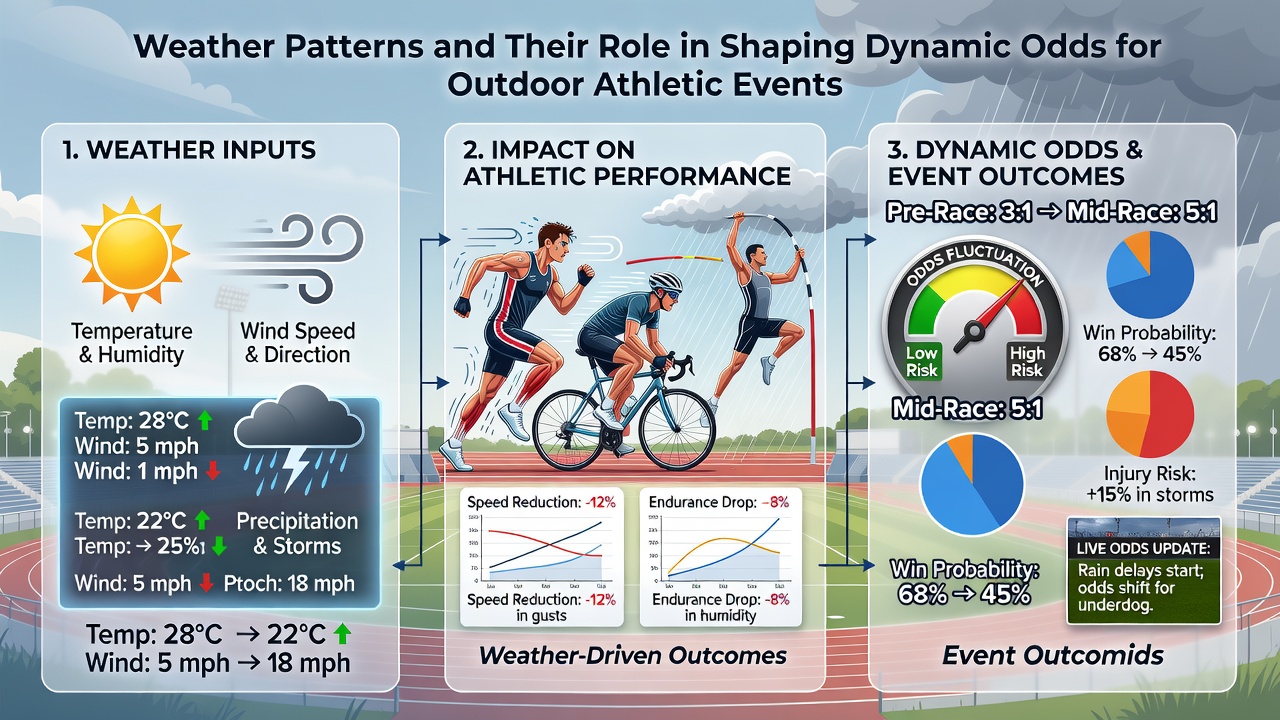
Weather patterns exert measurable influence on outdoor athletic events, and data from meteorological agencies shows that shifts in temperature, precipitation, and wind speed prompt real-time adjustments to betting odds across multiple sports, while operators layer in player protection mechanisms to manage account activity during those fluctuations.
How Meteorological Data Informs Event Probabilities
Studies from the National Oceanic and Atmospheric Administration indicate that temperature deviations of even three degrees Celsius alter athlete performance metrics in endurance and team sports, leading operators to recalibrate pre-event lines accordingly. Researchers at the European Centre for Medium-Range Weather Forecasts track humidity and barometric pressure because those variables correlate with reduced sprint times and altered ball trajectories in field sports, prompting fractional adjustments to spread and total markets hours before competition begins.
Operators integrate live feeds from ground stations and satellite observations so that sudden wind gusts above twenty-five kilometers per hour trigger automated reviews of player prop odds, particularly in events scheduled for September 2026 when seasonal transition patterns historically increase variability across North American and European venues.
Real-Time Line Movement During Weather Events
Bookmakers monitor radar loops and nowcasting models to update totals and moneylines as precipitation arrives, because wet surfaces reduce traction and passing accuracy in team sports while increasing the likelihood of lower scoring outputs. Observers note that these changes occur within minutes of updated forecasts, and the resulting odds movement reflects aggregated data rather than speculation.
Platforms maintain separate risk engines that flag rapid line shifts caused by weather, then apply velocity checks on new wagers to prevent exploitation during those windows. Account-level controls, including temporary deposit caps and session reminders, activate automatically when weather-driven volatility exceeds predefined thresholds, ensuring that participants encounter protective prompts before additional stakes are placed.
Player Protection Mechanisms Tied to Dynamic Markets
Regulatory frameworks in Australia and Canada require operators to link weather-related odds volatility to responsible gambling tools, so that users receive tailored alerts when market movement exceeds historical norms for a given event type. Data from the Australian Bureau of Meteorology feeds directly into these systems because precise rainfall predictions allow platforms to anticipate which markets will see the steepest adjustments and to pre-load cooling-off options for affected accounts.
Operators also deploy time-based spending limits that tighten during periods of elevated line movement, and those limits reset only after the weather event stabilizes and odds settle. Research published through university sports science programs demonstrates that such integrated safeguards reduce the frequency of impulsive wagering during live conditions without restricting access to information about the underlying event.
Seasonal Patterns and September 2026 Outlook
Historical records show that September often marks the transition from summer heat to autumn instability across major athletic calendars, producing more frequent afternoon thunderstorms and shifting wind patterns that affect both scheduling and performance projections. Organizers of outdoor competitions scheduled for September 2026 already incorporate contingency protocols that feed updated start times into betting systems, allowing odds to reflect revised conditions rather than original forecasts.
Operators test these integrations months in advance by simulating weather scenarios drawn from past September data sets, then calibrate protection thresholds so that account interventions scale with the magnitude of expected line movement. This approach ensures continuity between meteorological reality and market integrity while maintaining compliance across jurisdictions that emphasize harm minimization alongside market functionality.
Conclusion
Weather patterns continue to drive measurable changes in outdoor athletic event probabilities, and the integration of player protection features ensures that dynamic odds adjustments occur within frameworks that prioritize account safety. Data from established meteorological and regulatory sources supports ongoing refinement of these systems as seasonal patterns evolve through 2026 and beyond.